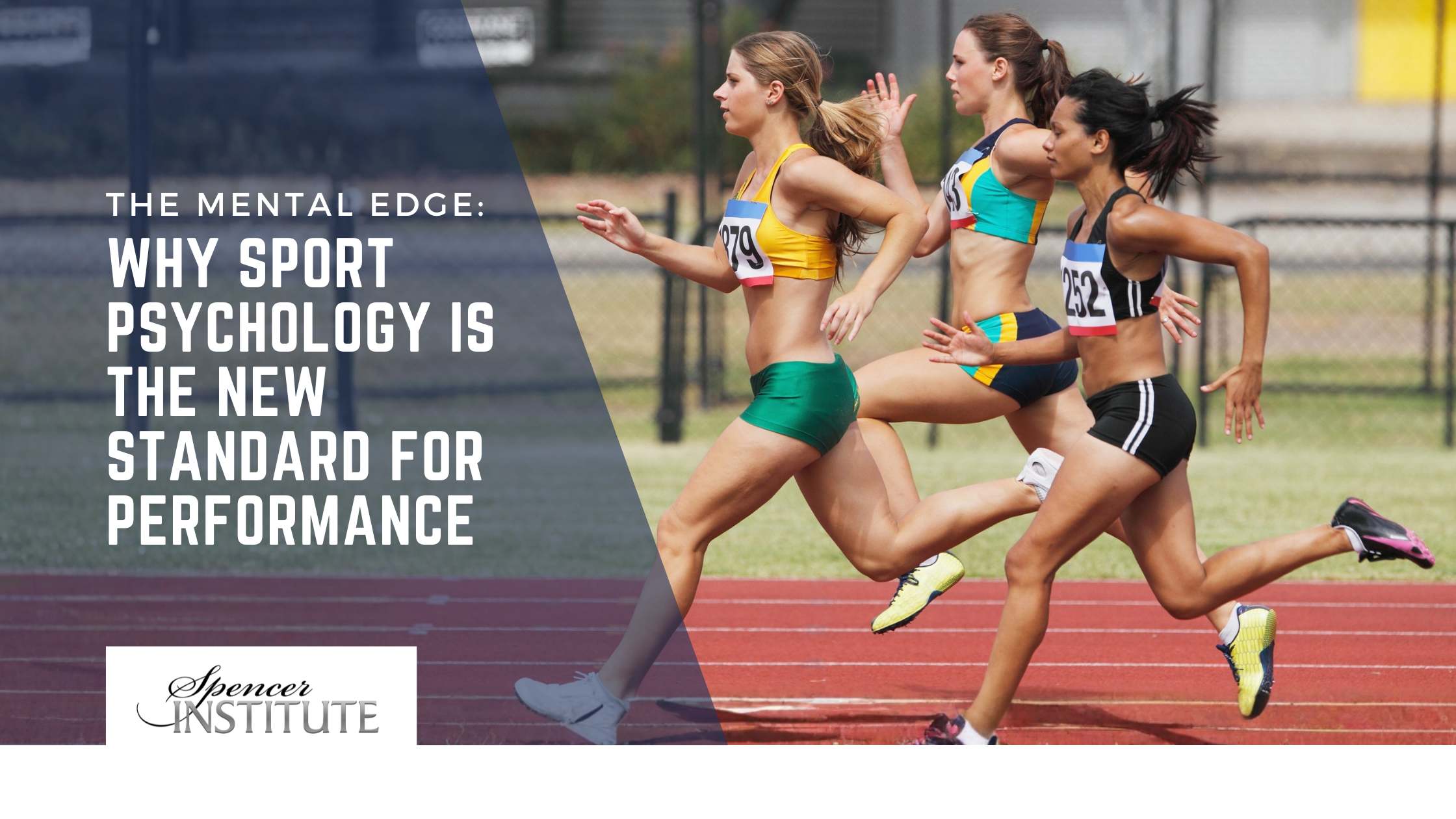
The conversation around athletic performance has changed significantly over recent years. For decades, coaching focused almost exclusively on physical training volume, proper technique, optimal nutrition, and physical recovery. The athletes who consistently perform at the highest levels have long understood something that scientific research is now confirming in volume. The mental dimension of performance is an essential component of success.
Sport psychology has moved from the margins to the mainstream. Elite sports programs now employ dedicated mental performance staff to support their athletes. Recreational athletes are actively seeking coaches who can address the psychological side of their training programs. Fitness professionals who understand the science of motivation, arousal, anxiety, and confidence are finding themselves in far greater demand.
The Spencer Institute Sport Psychology Coach certification is designed for professionals who are ready to close this gap. It provides an opportunity to add a rigorous, evidence-based psychological layer to your existing practice. This empowers you to support the full complexity of human performance and help your clients excel.
This article explores what that certification means, what the curriculum teaches, and why the professionals who complete it describe it as a highly valuable investment for their coaching careers.
What the Spencer Institute Sport Psychology Coach Program Covers
The Spencer Institute certification offers a structured, multi-module program built around the specific psychological factors that influence sport and exercise behavior. It provides practical coaching strategies that address these factors directly to improve client outcomes.
The Science of the Field
The program begins with the history and foundational concepts of exercise and sport psychology. It traces the discipline from Norman Triplett’s 1890s research on social facilitation through to the sophisticated, multidisciplinary field it has become today. Understanding where the field came from provides important context for why particular approaches are taken, why certain theories hold authority, and how the field continues to evolve.
Students learn the three major theoretical orientations that practicing sport psychologists draw on. The psychophysiological orientation examines the interactions between the brain and the body. The social psychological orientation considers how the external environment and personal makeup interact. Finally, the cognitive behavioral orientation places thoughts and cognitions at the center of behavioral change.
Personality, Motivation, and What Actually Drives Athletes
A substantial portion of the program is devoted to understanding what motivates athletes and exercisers. This includes personality theory and its relationship to sport choice and performance. The interactional view of motivation is explored alongside the Self-Determination Theory framework. This framework explains how fulfilling the psychological needs of competence, autonomy, and relatedness moves participants from amotivation toward intrinsic engagement.
The program also covers Achievement Goal Theory, Attribution Theory, and the Entity versus Incremental views of ability. These concepts have direct implications for how coaches frame challenges, deliver feedback, and respond when clients struggle. Each concept translates into a specific set of actionable coaching behaviors.
Arousal, Anxiety, and the Psychology of Pressure
Among the most practically relevant content in the certification is its coverage of arousal and anxiety management. Students learn to distinguish between trait anxiety, which is a stable personality predisposition, and state anxiety, which is a temporary emotional response. Coaches must understand how these interact in competitive and evaluative situations.
The program covers three major arousal-performance theories. These include the Inverted U Hypothesis, the Individual Zones of Optimal Functioning (IZOF) model, and Multidimensional Anxiety Theory. The IZOF model represents a significant practical advance. It recognizes that each athlete has a personal bandwidth within which they perform best. The coach’s job is to identify and support that individual zone.
The Psychological Benefits of Exercise
The certification addresses a dimension especially relevant to fitness professionals working in non-competitive contexts. The well-documented psychological benefits of exercise include the reduction of anxiety and depression. Regular exercise enhances mood, builds self-esteem and confidence, promotes social well-being through group participation, and supports stress management.
The runner’s high is a neurochemical phenomenon characterized by endorphin release during sustained, moderate-to-high-intensity endurance activity. The course covers this concept as a practical motivational tool for coaches to help clients build endurance exercise habits.
Competition, Cooperation, and the Four-Stage Model
Understanding competition is fundamental to sport psychology coaching. The program teaches the four-stage competition process. This process includes the objective situation, subjective appraisal, response, and consequences. The curriculum explores why the athlete’s perception of outcomes matters significantly more than objective results.
Students learn how to modify competitive environments and when to emphasize cooperation over competition. Research evidence from over 120 studies consistently shows that cooperative structures produce higher achievement than purely competitive ones in most learning contexts.
What Sets Spencer Institute Graduates Apart
A Psychology-Informed Coaching Language
Coaches who complete the Spencer Institute Sport Psychology certification develop a precise, evidence-based vocabulary. They use this vocabulary to describe and address what they observe in their clients. Graduates can articulate the difference between a motivational deficit and an environmental mismatch.
They can identify whether a client’s pre-competition anxiety is trait-driven or situationally triggered. Furthermore, they understand which types of feedback will support positive attributions and which will inadvertently reinforce helplessness. This precision means the coach is applying a proven framework to help clients transform their performance.
The Ability to Work Across Populations
A major practical strength of this certification is its breadth of applicability. The psychology of motivation and performance is relevant across the full spectrum of sport and exercise participation.
Youth athletes navigate the early development of competitive identity. Adults manage the complex interplay of health goals and life demands. Older adults often find that exercise is increasingly tied to psychological vitality and purpose. Competitive athletes at any level may find their performance constrained by mental barriers rather than physical capacity. Spencer Institute graduates are equipped to work effectively with all these populations and adapt their approach appropriately.
An Ethical Foundation
The program addresses the ethical responsibilities of the sport psychology coach in detail. This includes competence, confidentiality, and informed consent. It clearly defines the distinction between the educational scope of a certified coach and the clinical scope of a licensed psychologist. Graduates understand clearly where their professional authority begins and ends, allowing them to practice with confidence and integrity.
Who This Certification Is For
The Spencer Institute Sport Psychology Coach certification is designed for diverse professionals looking to advance their careers.
Personal trainers and fitness coaches utilize the program to address the psychological dimension of client motivation, adherence, and goal achievement. Athletic coaches at youth, collegiate, or recreational levels seek this certification to gain a structured understanding of mental performance. Health and wellness professionals often work with clients for whom psychological factors are a primary barrier to consistent exercise participation.
Sport psychology students and graduates use the program to complement their academic knowledge with a practical, applied coaching framework. Finally, professionals in transition find the certification highly beneficial as they expand their service offerings into the growing field of mental performance coaching.
The certification does not require a background in clinical psychology. It is built for practitioners who work directly with athletes and clients. The course content is designed to be applied immediately to achieve outcome-focused results.
Frequently Asked Questions
Do I need a psychology degree to enroll in the Spencer Institute Sport Psychology Coach certification?
No. The program is designed specifically for fitness and coaching professionals, rather than clinical psychologists. It teaches the applied science of sport and exercise psychology in a format appropriate for practitioners working in coaching and fitness contexts.
What is the difference between a sport psychology coach and a clinical sport psychologist?
A sport psychology coach operates in an educational capacity. They teach mental skills, design motivational environments, and apply evidence-based psychological frameworks to improve performance and well-being. A clinical sport psychologist is a licensed mental health professional trained to diagnose and treat psychological disorders. The Spencer Institute program trains coaches using an educational model, and its curriculum clearly defines the boundaries of appropriate practice.
How long does the certification take to complete?
The program is self-paced, allowing students to progress on their own schedule and maintain existing professional commitments. Most students complete the certification within a few months of consistent study using our interactive online modules.
Will this certification help me attract more clients?
Professionals who can credibly address the psychological dimension of performance are meeting a genuine and growing market demand. Clients increasingly seek coaches who can support the full picture of their performance, including motivation, anxiety, confidence, and adherence.
Is the content relevant to non-competitive clients who exercise for health rather than sport?
Absolutely. The psychological principles taught in the certification apply equally to competitive athletes and recreational exercisers. Motivation theory, arousal management, the mood-exercise cycle, and the psychological benefits of exercise are highly relevant to a client working on general health goals.
What topics does the program cover?
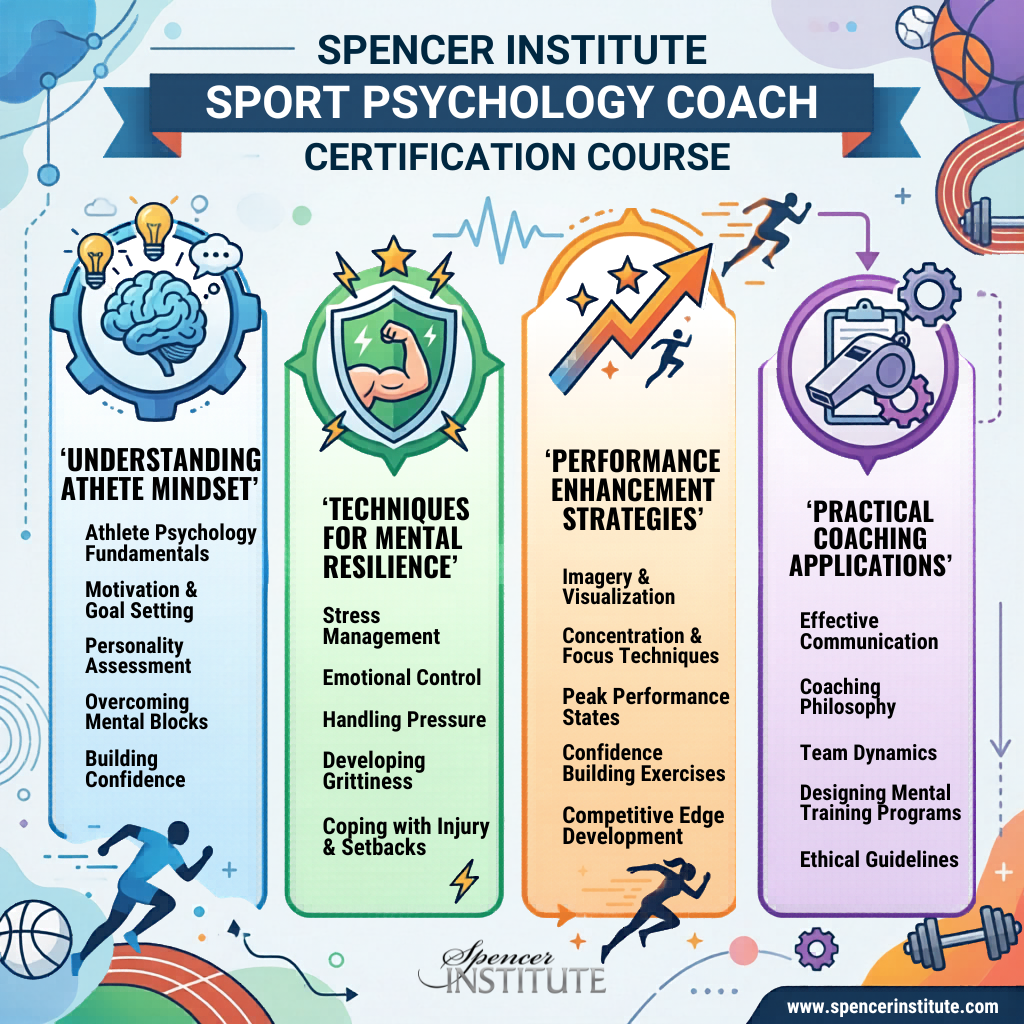
The program covers the history and foundations of sport and exercise psychology, personality and sport, and motivation theory. It also explores arousal and anxiety management, the psychology of competition and cooperation, the psychological benefits of exercise, ethics in sport psychology practice, and practical coaching applications.
Mastering the Mental and Physical Dimensions of Performance
The athletes and clients who benefit most from coaching are those whose coach understands what the mind is doing while the body performs. Building a successful coaching future requires a deep understanding of these intertwined dimensions.
The Spencer Institute Sport Psychology Coach certification provides that exact understanding. It is a rigorous, evidence-based program that equips coaching professionals with the knowledge, the frameworks, and the practical tools to address the full psychological complexity of human performance. Implementing these strategies will help you engage your clients and elevate your coaching business.
If expanding into sport psychology coaching aligns with your career goals, exploring the Spencer Institute certification is a logical and well-supported next step. We invite you to explore the curriculum on the Spencer Institute website or reach out to our enrollment team if you have questions.