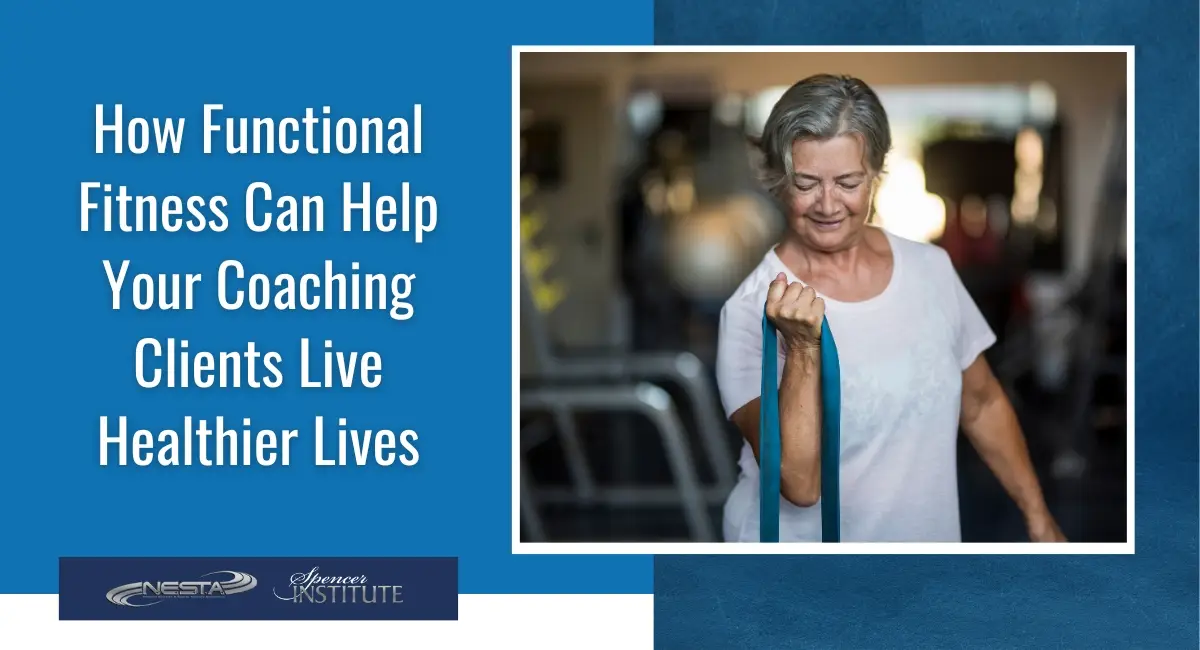
Functional fitness is a type of exercise that focuses on movements and exercises that mimic real-life activities, such as lifting heavy objects, pushing, pulling, and twisting. It is a popular form of fitness training that has been gaining popularity in recent years due to its practical applications and many benefits.
Unlike traditional gym workouts, functional fitness aims to improve overall strength, mobility, and balance to help people perform daily activities with ease. Functional fitness workouts typically involve multiple muscle groups and are designed to improve overall physical function rather than just focusing on building muscle mass or improving cardiovascular endurance.
You could argue that functional fitness is akin to a holistic approach to fitness because it focuses on improving overall physical function, not just building muscle or burning calories. As a health, holistic, wellness, or nutrition coach, offering functional fitness to your clients can provide a well-rounded fitness program that addresses your client’s unique physical needs, goals, and challenges.
Benefits of Functional Movements for Health Coaching Clients
One of the main benefits of functional fitness is that it can help improve overall physical function and performance in everyday life. By incorporating movements that mimic daily activities, functional fitness can help individuals become better equipped to perform everyday tasks, such as lifting heavy objects, bending down to pick things up, and carrying groceries.
Another key benefit of functional fitness is that it can help improve overall mobility and flexibility. Many functional fitness exercises involve stretching and dynamic movements that can help improve the overall range of motion and flexibility. This can help reduce the risk of injury and improve overall athletic performance.
Functional fitness can also help improve overall strength and endurance. Unlike traditional gym workouts that focus on isolating individual muscle groups, functional fitness exercises involve multiple muscle groups. By incorporating exercises like push-ups, pull-ups, and squats, individuals can improve their strength and endurance, which can help improve overall athletic performance and reduce the risk of injury.
Functional fitness can be especially beneficial for individuals who are looking to improve their overall fitness but may not have access to a gym or expensive equipment. Many functional fitness exercises can be done with little or no equipment, making them an accessible and cost-effective way to improve overall physical function and performance.
Health Coaching Clients That Could Benefit from Functional Fitness
Functional fitness is a holistic approach to fitness that focuses on improving overall physical function, not just building muscle or burning calories. A health coach who offers functional fitness to their clients can provide a well-rounded fitness program that addresses their clients’ physical needs, goals, and challenges. Here are some specific client populations that can benefit from functional fitness:
Senior Adults: Functional fitness can help improve overall mobility, balance, and stability, which can help reduce the risk of falls and injuries in older adults. If you work with a lot of older clients, incorporating functional fitness exercises into their routine, can help your clients maintain their physical function and independence.
Young Athletes: Functional fitness can help improve overall athletic performance by improving strength, endurance, and flexibility. Many functional fitness exercises involve movements that mimic sports-specific movements, which can help your clients become better equipped to perform their chosen sport. Check out the Youth Performance Specialist course to learn more about working with youth athletes.
Clients with chronic conditions: Functional fitness can help improve overall physical function and quality of life in individuals with chronic conditions, such as arthritis, diabetes, and heart disease. By incorporating functional fitness exercises into their daily routine, individuals with chronic conditions can improve their overall strength and endurance, which can help manage their condition and improve overall health.
Clients with Sedentary Lifestyles: Functional fitness can help your clients who have sedentary lifestyles improve their overall physical function and reduce the risk of chronic diseases associated with inactivity.
Post-rehabilitation Patients: Functional fitness can be beneficial for your clients who have completed physical rehabilitation programs. By incorporating functional fitness exercises into their daily routine, individuals can maintain their physical function and reduce the risk of future injuries.
Simple Functional Fitness Movements to Incorporate into Your Clients’ Routine (with Modifications!)
One of the greatest aspects of functional movements is that they are often recognizable. In fact, you may be surprised to learn that many of the most classic exercise movements are also functional movements. These exercises can be combined into a functional fitness workout routine by performing a few sets of each exercise with a specified number of reps or time intervals. It’s important to start with a warm-up and gradually increase the intensity of the workout over time.
Squats
Squats can help improve overall lower body strength and balance. To perform a squat, your clients will stand with their feet shoulder-width apart, lower down into a squat position by bending at the knees and hips, and then return to a standing position.
Modification: If you need to offer a modification, have your client do a Sit-to-Stand which involves standing up from a chair and then sitting back down. It helps improve leg strength and mobility, which can be beneficial for daily activities such as getting up from a chair or walking up stairs. They can also try a wall squat by leaning against a wall with feet shoulder-width apart and then bending the knees and sliding down the wall. This exercise helps improve leg strength and can be a good exercise for seniors who may have difficulty doing traditional squats.
Lunges
Lunges are another functional fitness exercise that can help improve your client’s overall lower body strength and balance. To perform a lunge, your client will step forward with one foot, lower down into a lunge position by bending both knees and then return to a standing position.
Push-ups
Push-ups can help improve upper body strength and stability. To perform a push-up, start in a plank position with hands shoulder-width apart, lower down by bending the elbows, and then push back up to a plank position.
Modification: Wall push-ups are a modified version of the traditional push-up that can be done against a wall. They help improve upper body strength and can be a good exercise for seniors who may have difficulty doing traditional push-ups.
Deadlifts
When done properly, deadlifts help improve overall lower body strength and stability. To perform a deadlift, your clients will need to stand with feet shoulder-width apart, bend at the hips to lower down and grab a weight with both hands and then return to a standing position while lifting the weight.
Modification: Leg swings involve standing on one leg and swinging the other leg forward and backward. This exercise helps improve balance and mobility in the hips and legs.
Burpees
Burpees are an exercise that can help improve overall strength and endurance. To perform a burpee, your clients will start in a standing position, lower down into a squat position, kick the legs back into a plank position, perform a push-up, jump the legs back into a squat position, and then jump up to a standing position.
Planks
Planks are a functional fitness exercise that can help improve overall core strength and stability. To perform a plank, your client will start in a push-up position with hands shoulder-width apart, lower down onto the forearms, and hold the position for a specified amount of time.
REMEMBER: If your clients fall into special populations that need additional considerations, like seniors or any client with pre-existing medical conditions or injuries, they will want to run any fitness routine by their primary care provider.
Where Can You Learn More?
If you were to ask most people what a personal trainer can help them achieve, they will most likely list weight loss and to be able to lift more and build up muscle. A personal fitness trainer is typically thought of as someone who can help you get in physical shape. But there is way more to getting in shape than simply the physical act of working out.
Whether it’s lifting heavy objects, playing with kids, or enjoying outdoor activities, functional fitness can help individuals perform everyday tasks with ease and enjoy a healthier, more active lifestyle. By offering functional fitness to their clients, health coaches can provide a more varied and engaging fitness program that can lead to greater client satisfaction. Clients who enjoy their workouts and see improvements in their physical function are more likely to continue with their fitness program over the long term.
There is always something exciting about earning a new training or coaching certification and applying that new knowledge of how you train your clients. This also helps you hit the reset button.
Is your recertification coming up? Learn more about earning your CEU credits. You can find the full list of CEU courses here.
That’s it for now.
Take action!