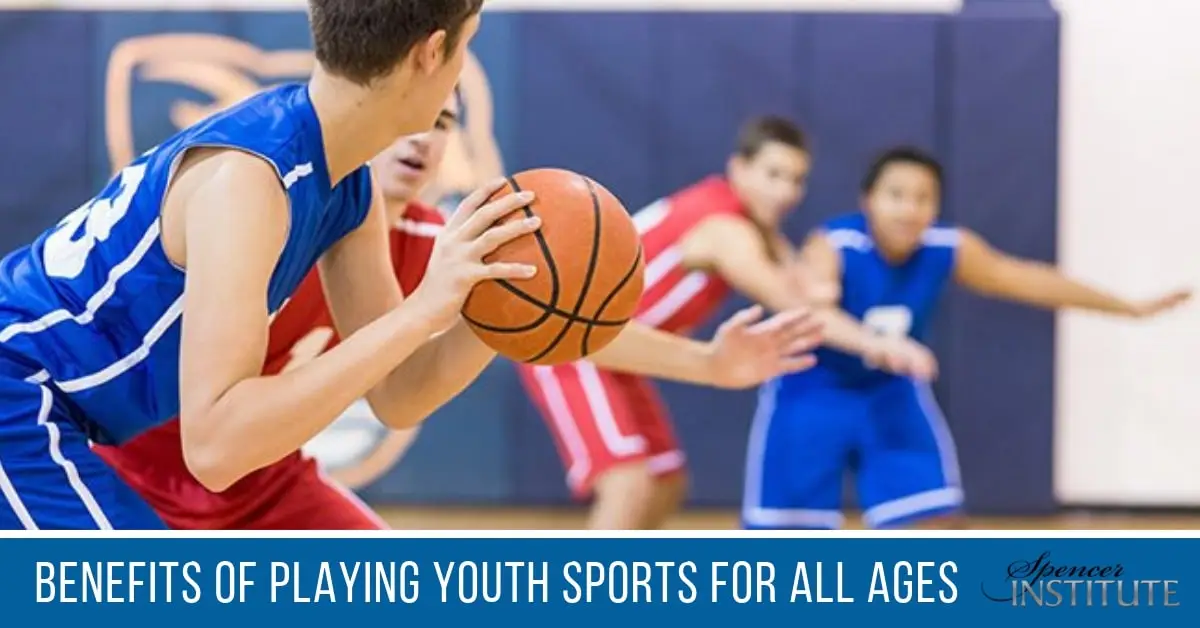
 Participants in youth sports fit into three age categories, each with unique characteristics.
While obvious differences exist among the three groups, as a professional youth sports and performance coach it is important for you to recognize that all age groups also share a common belief in having fun and engaging in a personal pursuit of excellence under the guidance of a knowledgeable and committed coach.
The 6-11-Year-Old Group
The major focus is on fun, fitness, and fundamentals, with an approach that emphasizes participation rather than intense competition and instruction aimed at developing skills and techniques. These athletes are the “busy bees” in sports who want to be involved in everything at the same time – and every 10 minutes in something new and exciting.
This group can be entertaining to watch but they also tend to become bored easily, especially if FUN is not part of the program. When they are bored, young kids lose focus and can become discipline and management problems. Their attention span is minimal, and therefore long practices don’t generally lead to a lot of new learning.
The children in this age group are enjoyable to coach because of their spontaneity, their willingness to try anything, and their eagerness to learn. They will bring homemade cookies and birthday cards, and they want above all to be with their friends and have fun together.
11-15-Years Old
The major focus is participation and skill refinement. These athletes are in the transitional stage of learning (passing from childhood to adulthood) and, true to their nature, love to challenge authority.
At the same time, they seem to experience some daily identity crisis on whatever issue. Life resembles an emotional roller coaster with ups and downs, like a yo-yo. They are the real socializers, which means peer influence, positive and negative, has a major impact.
The 15-and-Over Group
This group is ready for higher demands of intense competition – strategies and tactics – and is able to deal emotionally with the aspects and consequences of winning or losing. This group is also ready for evaluation and critique by the coach, peers, and the public.
Except for a few, these athletes have reached maturity, have improved their communication skills, and are striving to become more independent. These athletes need a coach who is able to contribute to the final stages of maturity and assist in the “finetuning” of individual and social skills. They should be given the freedom to think critically, make independent decisions, and face the consequences of their decisions. The athletes’ experiences during this period form the basis for value systems they can carry forward into young adulthood.
Benefits of Participating in Youth Sports
Sports, whether team-based or individual, are a great activity for children that provide a variety of benefits other than physical activity. Participation in sports can help build self-esteem and confidence, can motivate children to excel academically and can help build social skills. Participation also can teach children the benefits of goal-setting and practice.
Physical Benefits
This is a time when kids are exploring their bodies. Youth sports participants come in many varying stages of physical development and maturity. Some are tall and thin; some are short and stout; some are strong and have lean bodies, while others are rather soft and weak; some are quite agile, yet others seem to have three left feet. But none come fully developed, and all are exploring the challenge of discovering what they can do with their bodies. Typically, they are eager (some are timid and hesitant but show desire) to learn new skills. They have lots of energy but need good instruction, direction, and focus.
They need to know the right positions and feel of a correct stance – whether hitting a ball, fielding a grounder, shooting a lay-up, or blocking a defender. They want to learn how to “keep their eye on the ball” so they can get a hit or “keep their eye on the rim” so they can make the basket. They need to learn that “staying low” and “having a wide base” can contribute to fielding a grounder, playing defense, or executing an effective block.
They want to learn ways to become stronger or quicker or faster. They also need to know and understand how all of these can be achieved in the sport safely. These are the types of fundamental experiences that are built into a youngster’s foundation through youth sport and youth sport coaches. They are much more important at this time of development than intricate offensive or defensive strategies, and certainly more important than winning the game. These experiences provide the foundation for future skill development, future athletic participation, and future successes.
Psychological Benefits
Youth sports activities provide some of a child’s earliest experiences for venturing out on his or her own. This is a time of taking risks, of developing self-confidence and trust, of building self-awareness and self-image, and of establishing and nurturing the youngster’s personal pride and individual identity. As simple as it may sound, childhood is a time to be happy and to have fun just being alive. Youth sport is an ideal environment for learning the importance of behavioral and emotional control, as well as developing concentration and attention focusing capabilities. Again, the nurturing and development of each of these provide the foundation for a child’s becoming healthy, happy, and successful in sports as well as in life.
Social Benefits
Youth sports can provide tremendous foundation experiences in a child’s social development. These include being a part of the team, learning to follow leadership, working together with others, coordinating moving and timing with other teammates in executing a play, contributing, giving, sharing, receiving, cooperating, compromising, accepting and being accepted, trusting and being able to be trusted, and enjoying the camaraderie of good friends and teammates. All of these are critical aspects and attributes of the social development of successful individuals, and all are intimately integral aspects of a positive youth sporting experience.
Moral Benefits
The development of moral reasoning – the ability to determine for oneself what is right from what is wrong and then make decisions about one’s actions and behavior accordingly -is one of life’s most critical lessons and compelling experiences. The many influences contributing to this process are powerfully active and influential during childhood.
Sport generally, and youth sports activities particularly, provide a perfect setting for challenging, testing, and gaining one’s sense of moral reasoning. All sports are defined and played by a set of rules. They spell out both the parameters and mechanics of the playing of the game, as well as the acceptable behavior and interactions of the participants. There is to be common agreement among all participants to abide by and play within the accepted rules. There are officials (referees, umpires, judges) assigned specifically to determine when individuals may have broken these rules and to assign penalties as punishment and deterrent for such behavior.
There are questions related to whether one can bend the rules a bit to one’s advantage. For any coach in this frame of mind or situation, it is usually qualified by several factors; this could include believing no one will get hurt by doing something – or in some cases, not doing something. Or, maybe the coach convinces themselves that it technically isn’t against the rules if they don’t get caught? Then there are times that coaches perceive breaking the rules if it helps youth in significant ways. But these are subjective to what the coach believes. That is not a team or sports coaching – this is more personal coaching. It’s not really coaching aimed at the development of the participant.
Ready to Jump into your Coaching Career?
The Youth Performance Coach Certification is designed for new and advanced coaches and trainers who want to specialize in the areas of youth athletics, youth mentorship and leadership for the next generation.
If you are new to youth coaching, training and mentoring, this is a great launching point for your career. You will gain valuable insight that will give you the skills needed to make a positive change in the lives of youth.
That’s it for now.
Take action!
PS: Click here to see many helpful business/career resources
And here is the link for the Youth Performance Coach certification again: https://spencerinstitute.com/certification-programs/youth-performance-coach-certification/