

Using Positive and Negative Emotional Attractors in Your Coaching Model
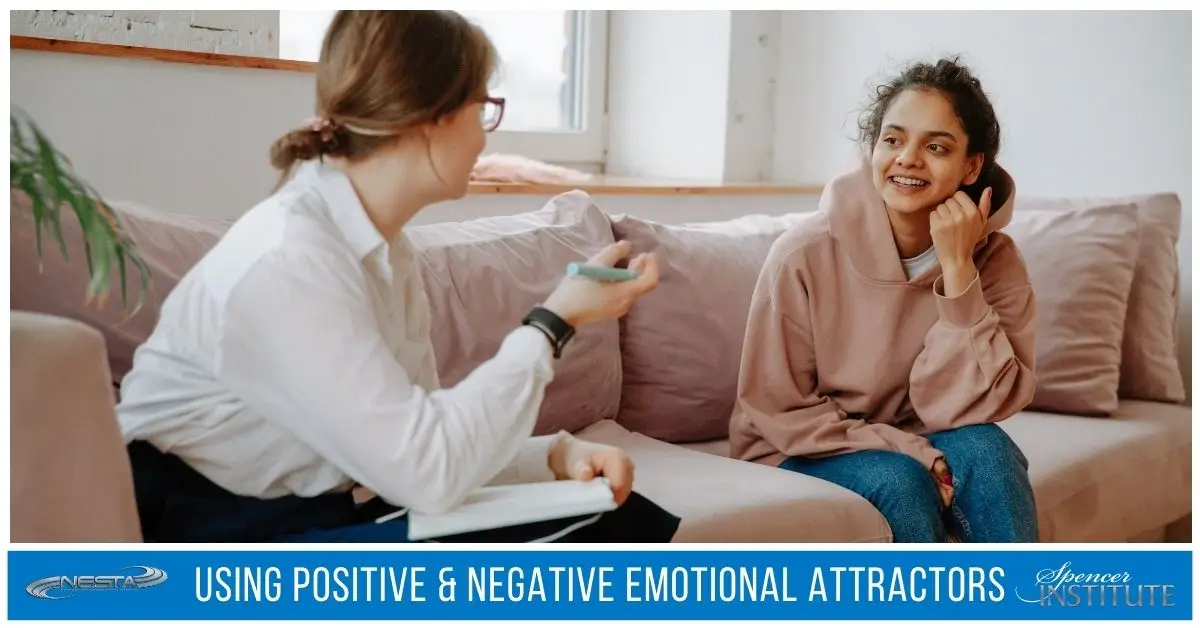 Personal visions have a long history in coaching and form the backbone of our work done with clients. For a client to reach holistic goals, there has to be a clear vision, and yet holism itself implies more than a single facet of our client. But getting to our client’s vision is so coveted, that it is a model used in other health, fitness, and wellness settings.
The Importance of Your Client’s Vision
When a personal trainer works with a client, is it even possible to reach an ideal fitness outcome without a vision? Yet only recently has the coaching industry explored new ways to get at a client’s vision. Modern coaching models resolve this. Therefore, our coaching model requires that we build upon the personal vision while coaching with our clients.
Many coaches currently in practice already know the importance of vision. For our client, it’s everything. Their dreams, their goals, and even their wellness. We also need to see what the client sees in themselves and how they see themselves viewed by others. We ask clients to look ahead at their ‘ideal self” and describe it, visually. In fact, the virtual reality and augmented reality fields are taking the aspect of vision and using it as a model for how the two can be applied in coaching.
Until we have such incredible technology everywhere, we will look at fusing the art of coaching with a little science and the tried and true method of conversation with our clients to learn all we can about them. Remember, we champion their strengths and minimize discussion of their weaknesses or shortcomings.
Positive Emotional Attractor vs Negative Emotional Attractor
Now it is time for us to introduce a theoretical perspective to coaching and our coaching model of actions that acknowledge the existence of two different states in which a client may find themselves when engaging in the creation of a personal vision: the Positive Emotional Attractor (PEA) and the Negative Emotional Attractor (NEA).
The use of the term attractor needs to be defined.
As coaches, we talk to clients and formulate goals. When we’re in the process of doing this, we often ask clients questions to draw out a vision of what they see – or what they’d like to see. Vision also gives the client a manner in which to communicate what they are thinking or maybe wanting to state – but in visual form. Vision is a significant part of health, fitness, and wellness coaching, as there is usually an aesthetic component to a goal; for goals decidedly less physical (personal goals), vision contributes in a couple of ways. We can try to learn what our client “sees” in their vision; we can also create a vision to aspire toward.
Consider the same personal trainer we described previously, asking a client to describe what their end goals and “ideal self” would look like. It’s powerful for the connection it creates between the coach and client; it’s also powerful for the client, as it allows them to visualize an aspect of their life they may have never envisioned. When done properly, a client could easily find that they are saying things for the first time. This is the level of intensity and interaction that we want with each client.
In this process of vision, we also have to find out two very important parts of the holistic puzzle:
What is most important to the client? What does this important item mean to the client?
The client may come to a coach in crisis, needing help with a health issue; they may use the coach to define ways to live healthily or, more healthy. While this is important, it is not enough. We also have to know what the client means by “living healthy”.
When we explore these two puzzle pieces, we typically saw that our client cites an influence on their priorities and decisions (importance) on a leader, mentor, or simply a parent. It could be an instructor or a coach. In the examples used, your client is most likely going to recall people who may have invoked change in the client previously, creating aspirations for what they see as their ideal self and these pieces come together to create one’s personal vision.
Another example a client might cite as influential is a person who believed in them trusted them and supported them. This person may have also instilled certain confidence in our client, and if maintained at a balanced level (not over-confident) then these too, are seen as positive attractors.
For your client, this attractor is influential, invoking thoughts, instilling beliefs, and influencing behaviors. When positive, they become a type of endorsement for our clients by building up the client’s strengths.
The combination of invoking the part of a vision and acknowledging our client’s strengths in the process of activating or arousing positive emotional attractors using AI. This is one way to resolve the problem seen in coaching whereby our client fails to change a health habit toward a holistic lifestyle. Have we successfully engaged our clients to acknowledge their own personal strengths (power), curiosity, and imagination? We never want to impose our often well-meaning will upon our client. We think “why can’t they just change?”
At times offering facts and expert advice, coaches using this model are not fostering change or self-development. This creates other problems in the coaching dynamic; it doesn’t allow for the client to own their own goals and it usually makes the coach feel more responsible for the change effort. It also implies that the coach can “fix” the client and when approached from this perspective, the results are rarely positive.
So we build our clients up, we boost their self-esteem, confidence, and worth by keeping the approach positive. But let us define things one step further: the difference between the PEA and the NEA is that they are two very different states and when our client is in a positive flow, their parasympathetic nervous system is dominating in the following ways:

While we are working toward building positive attributes within your client, we have to sometimes work around obstacles and barriers. We might consider these Negative Emotional Attractors. Awareness of these NEA’s is useful to know about in the earlier stages of coaching, allow- ing you to plan or strategize around them.

These two primary states are unique in that as attractors, each is then characterized by three dimensions:
- Positive vs. Negative Emotional Arousal
- Endocrine arousal of the parasympathetic nervous system versus the sympathetic nervous system.
- Neurological activation of the default mode network versus the task-positive network.
What does all of this mean? This is really all of the science we will discuss – but it is required for us to know the roots of the PEA and NEA states. For coaches who are trying to extract information (perhaps about the client’s vision), arousing the PEA is critical when creating or affirming a personal vision.
Examples to appreciate within your client include a sense of one’s purpose and ideal self; both are congruent with PEA. Therefore, we now look to advance our coaching model forward by learning the practical implications of the theory. In other words, this act of mining or fishing for client ‘positives’ will be a better frame for what comes next – the challenge of transforming oneself holistically.
For a couple of decades, the coaching profession has realized the need to master helping clients to create a vision; this also has shown to motivate clients to action and inspires them to reach beyond their current state or maintain the status quo.
In therapeutic settings, a counselor might search for antecedents and consequences of vision, but since these are more elusive components, we can focus simply more on what the vision is. Not what created it, not what influenced it. We go with the thinking that “it is what it is”. It would help our profession if we all agreed upon the definition and even the concept of vision; we do not fully understand all the underlying mechanisms that influence how a client arrives at an effective and meaningful vision. As coaches, we have to understand the importance and impact of a personal and shared vision.
Repowering Your Coaching Strategy
Coaches can re-power their coaching strategies by becoming aware of both the existence and critical role of these two fascinating psycho-physiological states (positive and negative emotional attractors) which appear to be intricately involved in the creation and realization of a personal vision for your client.
The PEA–NEA concept we are exploring is one of the first theories that allow us to bring together, and integrate, early work from health professionals and coaches on emotions and the self with recent advances in physiological measurement and neurological activity. In this manner, we can no longer simply say “the art of coaching,” but we must add “the art and science of coaching.”
But there is more, as this scientific perspective reveals the underlying mechanism of the visioning process itself and sheds light on how elements of the process of arriving at a vision consequently impact the content of the vision. We also know from existing research that all of this impacts the effectiveness of that vision becoming reality for your client.
Getting Started
The stress of living during a pandemic has turned our daily lives and the lives of our clients and their families upside down. It comes at no surprise that most of your clients are concerned about their health and well-being during this time.
If you focus your work in the “holistic” areas of health, fitness and wellness, the Certified Holistic Nutrition Coach course is your next step. Without this knowledge and certification, you won’t have everything you need to help all your clients.
Our Stress Management coaching program is designed for life coaches, as well as fitness and wellness professionals who want to expand his or her knowledge in the lucrative and expanding field.
Become a Certified Holistic Health Coach. Holistic health and well-being are essential to overall life success. Now you can earn a credential and gain the skills to help your clients achieve this success.
Our programs are open to anyone with a desire to learn and help others. There are no prerequisites.
That’s it for now.
Take action!
PS: Click here to see many helpful business/career resources

